
The Brain Chemistry of ADHD: What Parents Should Know About Dopamine, Serotonin, and Norepinephrine
ADHD Starts in the Brain, Not in Behavior
When a child struggles to stay on task, loses track of homework, or blurts out answers in class, it is easy to assume the problem is effort or discipline. But decades of neuroscience research tell a different story. ADHD is a neurodevelopmental condition driven by real, measurable differences in brain chemistry and brain maturation.
In a recent ADDitude Magazine webinar (Podcast #603, April 8, 2026), psychiatrist and researcher Gregory W. Mattingly, M.D., walked through the science behind ADHD, from the neurotransmitters involved to the latest research on how the ADHD brain develops differently. Dr. Mattingly is a psychopharmacology instructor at Washington University School of Medicine in St. Louis, a past president of the American Professional Society of ADHD and Related Disorders (APSARD), and a principal investigator in more than 500 clinical trials.
Here are the key takeaways for parents and educators.
The Six Neurotransmitters That Matter
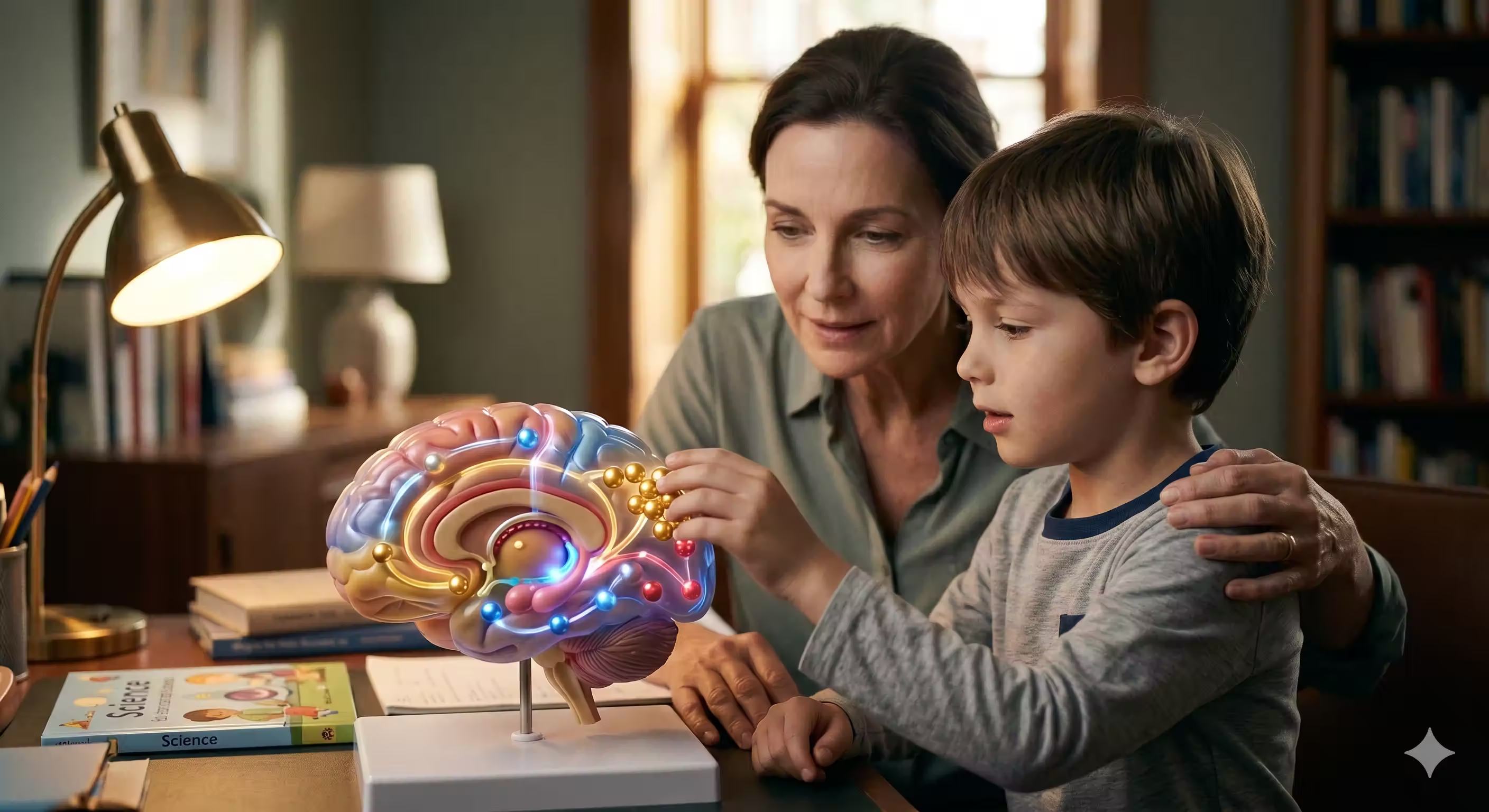
ADHD involves more than just dopamine. Dr. Mattingly outlined six neurotransmitters that play a role in attention, impulse control, mood, and learning:
- Dopamine drives focus and motivation. When dopamine levels are low in the prefrontal cortex, it becomes harder to start tasks, sustain attention, and feel rewarded by routine work.
- Norepinephrine supports alertness and energy. It helps the brain stay vigilant and respond to important signals in the environment.
- Serotonin regulates mood and emotional stability. Imbalances contribute to the irritability, anxiety, and emotional reactivity that often accompany ADHD.
- GABA is the brain's primary inhibitory neurotransmitter. It helps put the brakes on impulsive behavior.
- Glutamate drives excitability and is involved in learning and memory formation.
- Acetylcholine supports learning and memory consolidation.
The interplay between these chemicals is complex. ADHD is not simply a "dopamine deficit." It involves a broader imbalance across multiple systems, which is why symptoms show up differently from person to person and why treatment often needs to address more than one neurotransmitter pathway.
The ADHD Brain Matures on a Different Timeline
One of the most striking findings Dr. Mattingly shared comes from brain imaging research by Shaw et al. (Proceedings of the National Academy of Sciences, 2007). The study found that the cortex of children with ADHD reaches peak thickness approximately 1.5 to 2 years later than in typically developing children. The delay is most pronounced in the prefrontal cortex, the brain region responsible for planning, decision-making, and impulse control.
But there is an interesting counterpoint. The primary motor strip, the area that controls physical movement, actually matures about one year earlier in children with ADHD. This may help explain why children with ADHD are often physically restless: their motor systems are ready to go before their self-regulation systems have caught up.
This finding is important for parents and teachers to understand. A child with ADHD who cannot sit still is not choosing to be disruptive. Their brain development is genuinely out of sync.
Why So Many Adults Are Diagnosed Later in Life
Dr. Mattingly presented CDC data (Staley et al., MMWR, 2024) showing that more than 50% of all adults with ADHD are now diagnosed in adulthood, not childhood. The gender gap is significant:
- 45% of men with ADHD are diagnosed before age 12, compared to only 25% of women.
- 61% of women with ADHD are diagnosed in adulthood, compared to 40% of men.
- 9% of all ADHD adults are diagnosed after age 45.
Research also shows that higher IQ can compensate for ADHD impairments, effectively masking symptoms and delaying diagnosis (Breda et al., British Journal of Psychiatry, 2021). A bright student may get through high school or even college before the demands finally exceed their ability to compensate. This is especially common in girls and women, who are more likely to present with inattentive symptoms rather than hyperactivity.
Digital Media and ADHD Symptoms
Dr. Mattingly highlighted a JAMA study (Ra et al., 2018) that followed students at 10 public high schools in Los Angeles over two years. The finding: adolescents who engaged in a higher number of digital media activities at high frequency had a 14% chance of developing new ADHD symptoms by follow-up, compared to roughly 4% among those with no high-frequency digital media use.
A larger study from the ABCD cohort (Pediatrics, 2025) followed 8,324 children and confirmed that increased social media use was associated with rising ADHD-related symptoms over time, regardless of sex, prior ADHD diagnosis, genetic risk, or medication status.
This does not mean screens "cause" ADHD. But the research suggests that high-frequency digital media use can worsen attention and impulse-control symptoms, particularly in children who are already vulnerable.
Stress, Connectivity, and Neuroplasticity
Dr. Mattingly also discussed how chronic stress impacts the ADHD brain. Brain-derived neurotrophic factor (BDNF) is a protein essential for healthy neuroplasticity, the brain's ability to form and strengthen neural connections. Chronic stress decreases BDNF expression and reduces synaptic density, leaving the brain less resilient and more likely to decompensate under pressure.
Research shows that untreated adult ADHD is associated with decreased functional connectivity in key brain regions, including the medial prefrontal cortex and precuneus (Pretus et al., Human Brain Mapping, 2019). The more severe the ADHD symptoms, the weaker the connectivity.
The implication for families: managing stress is not just good advice. It is neurologically protective. Exercise, adequate sleep, structured routines, and supportive relationships all contribute to healthier brain connectivity.
What This Means for Families
Understanding the brain chemistry behind ADHD does not change the daily challenges families face, but it does reframe them. When parents understand that their child's struggles with focus, impulsivity, or emotional regulation are rooted in neurotransmitter imbalances and developmental timing, it becomes easier to respond with strategies rather than frustration.
At LINKZ, we see this understanding translate directly into better outcomes. Our tutors and executive functioning coaches work with students who have ADHD every day, building the external structures and strategies that support what the brain is still developing internally. Structured literacy approaches, multi-sensory instruction, and explicit executive functioning coaching all work with the ADHD brain rather than against it.
If your child has been diagnosed with ADHD, or if you suspect they may be struggling with attention, impulsivity, or emotional regulation, we are here to help. Schedule a free call to learn how our team can support your family.
Source: Mattingly, G.W. (April 8, 2026). "The Brain Chemistry of ADHD: Understanding Dopamine, Serotonin & Norepinephrine." ADDitude Magazine ADHD Experts Podcast #603. Slide deck references include Shaw P et al., PNAS 2007; Staley SB et al., MMWR 2024; Breda V et al., British Journal of Psychiatry 2021; Ra CK et al., JAMA 2018; Pretus et al., Human Brain Mapping 2019; Malhi & Mattingly, Translational Psychiatry 2019; Cell 2025.









.svg)


